

Every two weeks we release new podcast episodes on the people, projects, and ideas of Braver Angels, and other active groups who work to bridge divides and reduce toxic polarization. Braver Angels is America’s largest cross-partisan volunteer-led movement in this space and aims to make courageous citizenship the accepted norm.
We ask questions about constructive, practical ways to make the world a better place. Host and journalist Richard Davies, sound designer Miranda Shafer and former co-host Jim Meigs made more than 450 episodes together. We feature smart, lively interviews with a remarkable range of guests. We welcome playful, constructive and unusual opinions.
Find us on Apple Podcasts, Spotify, TuneIn, YouTube and all major podcast apps.

What role does the news media play in polarizing us? How do print, radio, TV, and online journalists reinforce our views of the world rather than connecting us to all sides of an issue?
Our guest is John Gable, co-founder and CEO of AllSides.com, which rates news media sites for bias, organizes citizen roundtables, and links readers every day to coverage from left, right, and center-biased media. AllSides presents major news stories from a range of perspectives. In the episode we hear how it does it and why.
Over four decades our podcast host, Richard Davies, worked in network radio newsrooms as a correspondent, reporter, and newscaster. He shares his concern that the work of many journalists “does more to divide us than make people curious about new ideas including those we disagree with or simply weren’t aware of.”
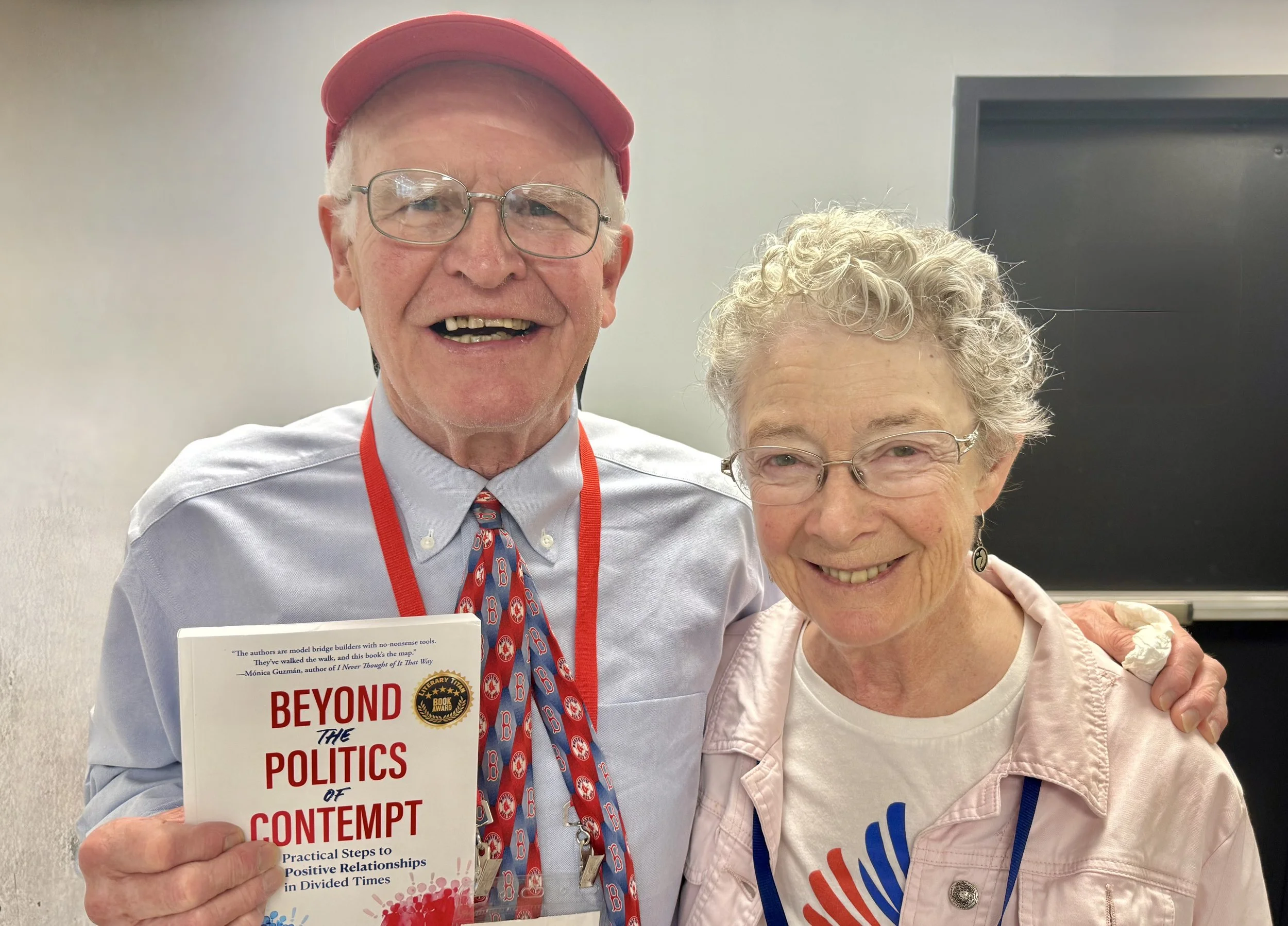
Here’s something many Democrats and Republicans agree on: The way we debate and discuss politics is messed up. We talk past each other instead of getting things done. Huge amounts of time and money are wasted on bickering and bravado. Neither political party has built a lasting coalition to deal with the most urgent problems of the day.
In this podcast we look something local and practical: New Hampshire’s experiment in bi-partisan cooperation. Dozens of state legislators are part of the nation’s first Braver Angels-inspired cross partisan caucus where elected officials put aside political combat and learn skills of cooperation.
Our guests are Democrat Patricia Higgins and Republican Doug Teschner. Patricia served in the New Hampshire House of Representatives from 2012 to 2018. Doug is also a former state legislator, and co-author of the recent book, “Beyond the Politics of Contempt: Practical Steps to Build Positive Relationships in Divided Times.”
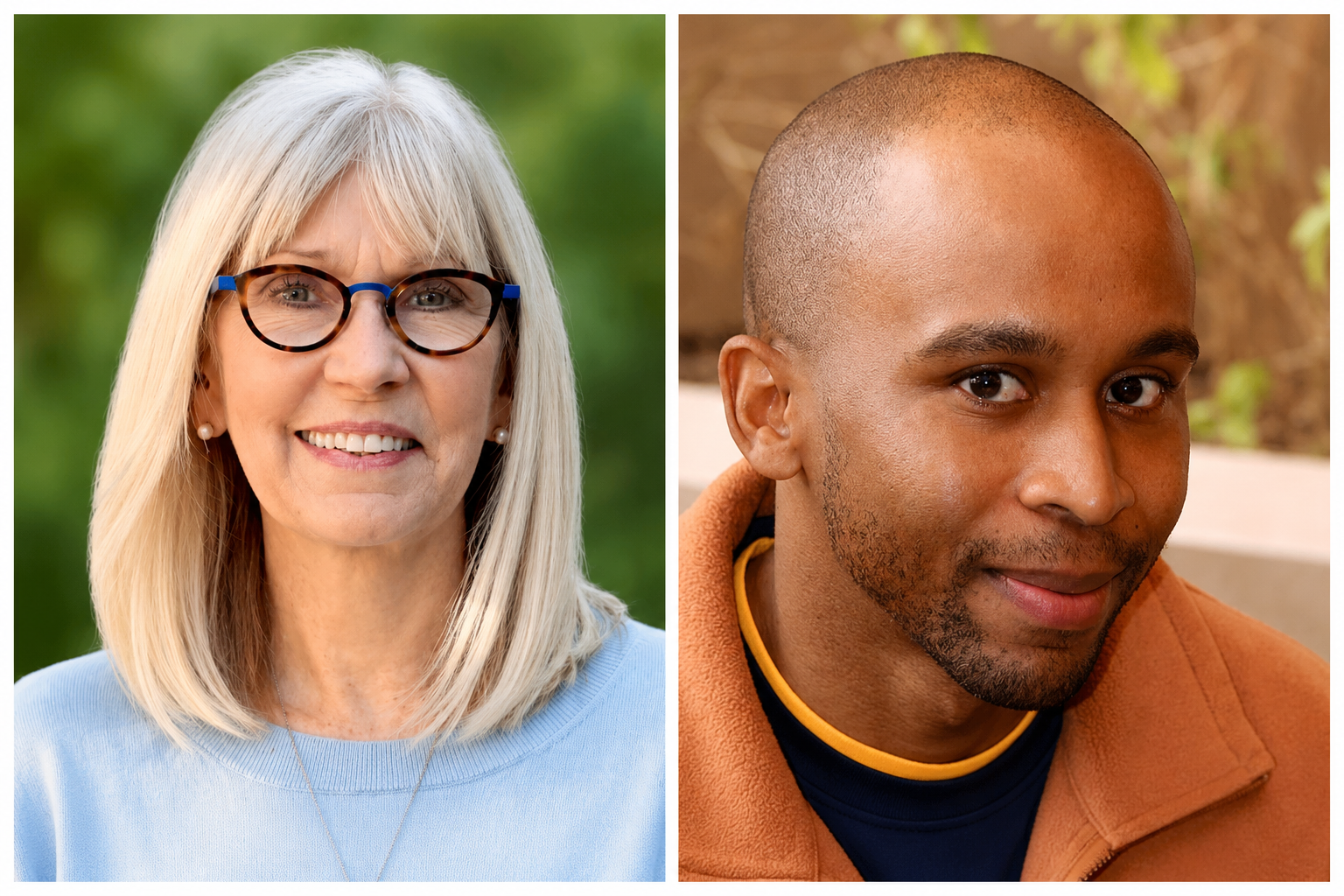
Here’s the bad news about civic renewal: It will not come easily or quickly. Toxic divides won’t be dramatically reduced because of one person or a dramatic election result. Renewal of America’s civic culture will require enormous effort in every state of the nation.
Now the good news. Everyone can make a difference. Participation in renewal requires neither money nor fame. It begins with all of us. Locally and often through one-on-one conversations. These personal encounters can change hearts and minds.
Our guests are Braver Angels volunteers Maryanne Colter and Chauncey Williams. Both of them embrace civic renewal in their communities.
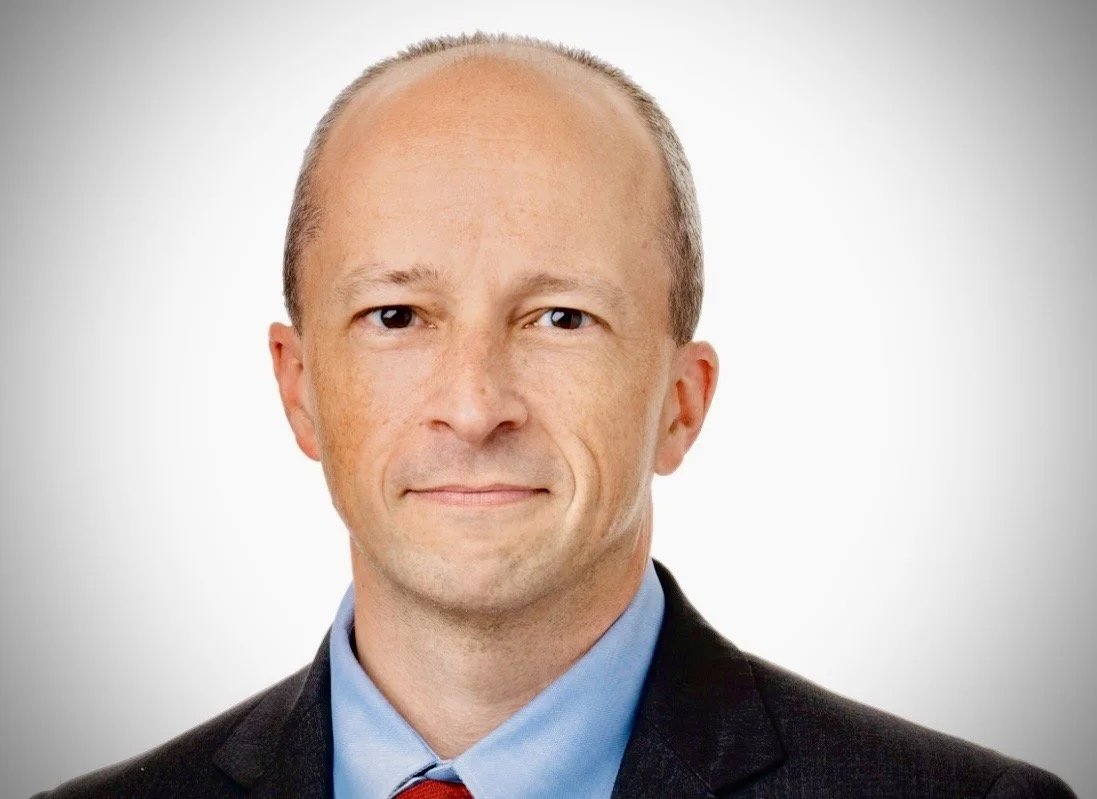
“Braver Angels events always leave me hopeful and energized,” says Yuval Levin of the recent Convention in Philadelphia.
“A lot of people from different parts of our politics, from different parts of our country, from different parts of our economy come together and express a a kind of conviction that ultimately our country matters more than our parties, and our country matters more than ideological convictions.”
In this wide-ranging conversation with one of America’s most admired public intellectuals, we discuss the resilience of the American constitutional system, the impact of attention politics, and the need for constructive disagreement and courageous citizenship at a time of toxic divides.
“The American political tradition speaks in the first person plural in a really beautiful way and speaks in the voice of a people taking a kind of common ownership of their future together,” he says.
Immigration law reform and enforcement is a very heated and emotional issue. In recent years, no public policy has been discussed with more outrage, demonization, and disgust. Both sides of the immigration debate demand total victory. But their all-or-nothing approach has resulted in nothing. No major immigration reform legislation has been signed into law in three decades.
Perhaps it’s time for less emotion and more respect for different points of view. The Braver Angels Citizens Commission on Immigration is working to show Congress and the nation that Americans with differing views on immigration can find common ground. The Commission includes includes citizens from all sides of the issue.
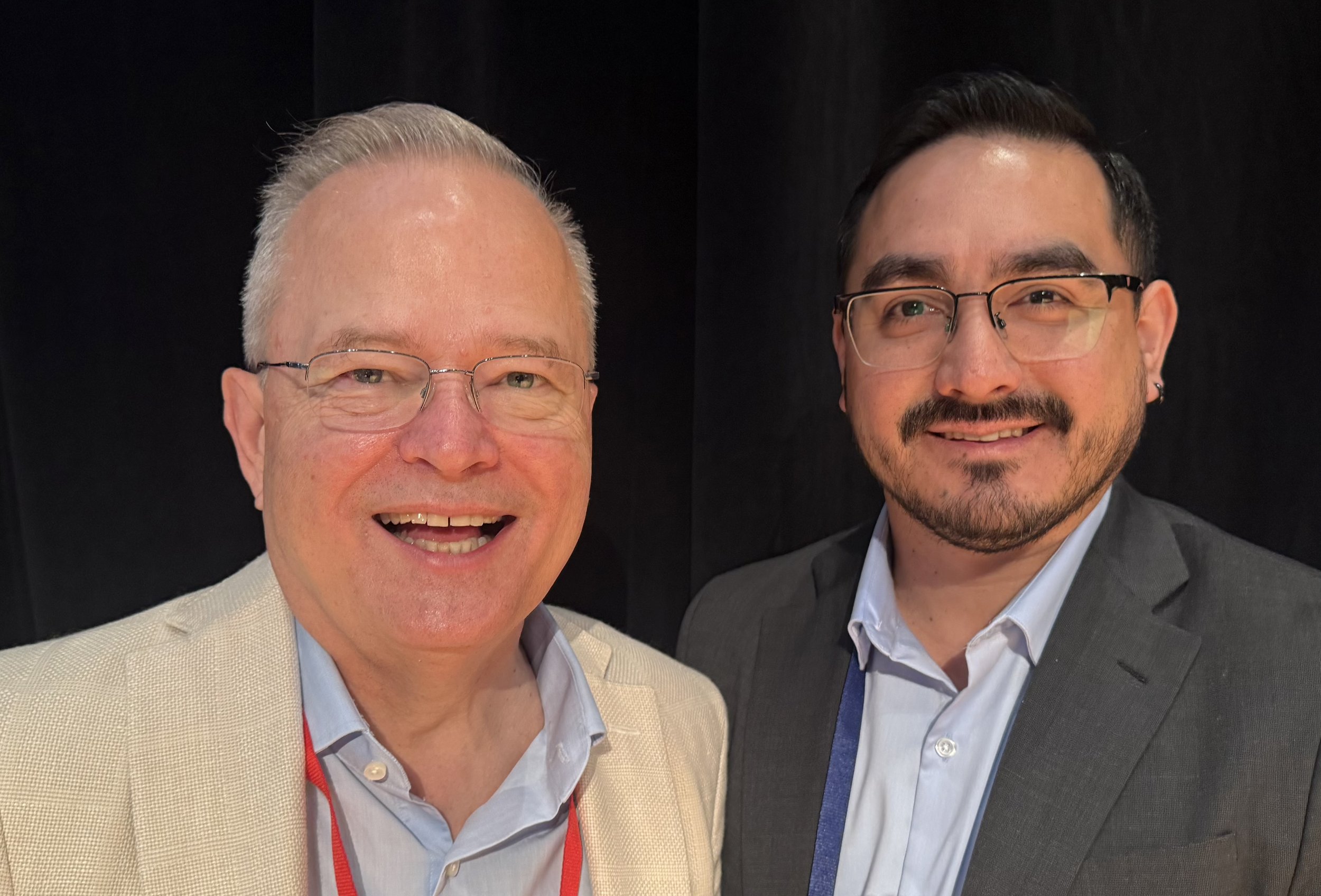
Our expert guests in this episode come from opposing sides of the debate. They work closely together and are now friends. Jim Robb and Diego Sanchez are on the leadership team of the Commission, and served as co-chairs at the recent Braver Angels National Convention in Philadelphia.
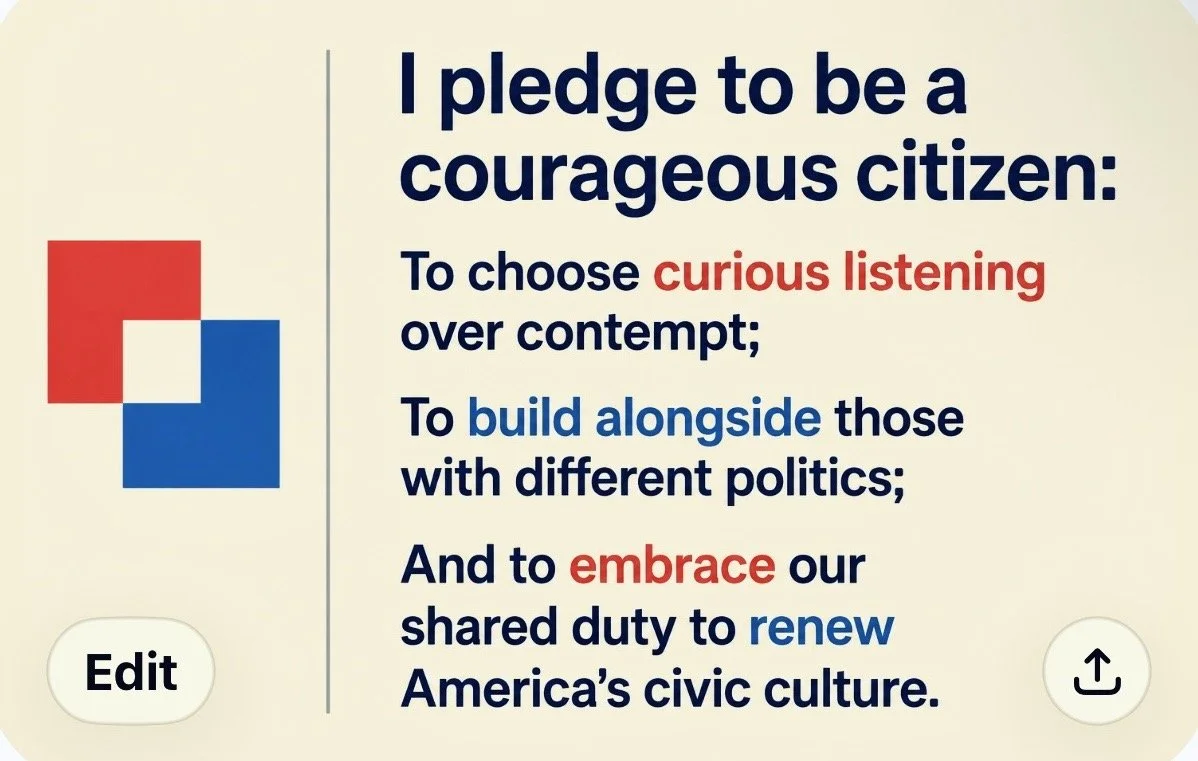
Something remarkable happened in Philadelphia, days before America celebrated its 250th birthday and streets away from where the Declaration of Independence was signed. Nearly 900 Braver Angels delegates at their Convention signed a pledge to be courageous citizens.
Being a courageous citizen stands in proud contrast to easy citizenship. In America’s current culture of contempt, it’s courageous to build, not destroy.
In this episode we hear from delegates, convention organizers and conference speakers, including two Members of Congress: Democrat Tom Suozzi and Republican Brian Fitzpatrick. Both Congressmen warmly praised Braver Angels for the work it does.
It's very easy to be outraged or depressed about American politics today, and much more challenging and interesting to consider how things might be better. Instead of dismissing our political opponents or viewing them with disdain or disgust, how can we understand them better and learn from them?
That's where Braver Angels 1:1 Conversations come in. Two people from different backgrounds and beliefs use a structured list of questions. The goals are for both of them to better understand their experiences, feelings and beliefs, find out what you may have in common, and learn how to bridge divides.
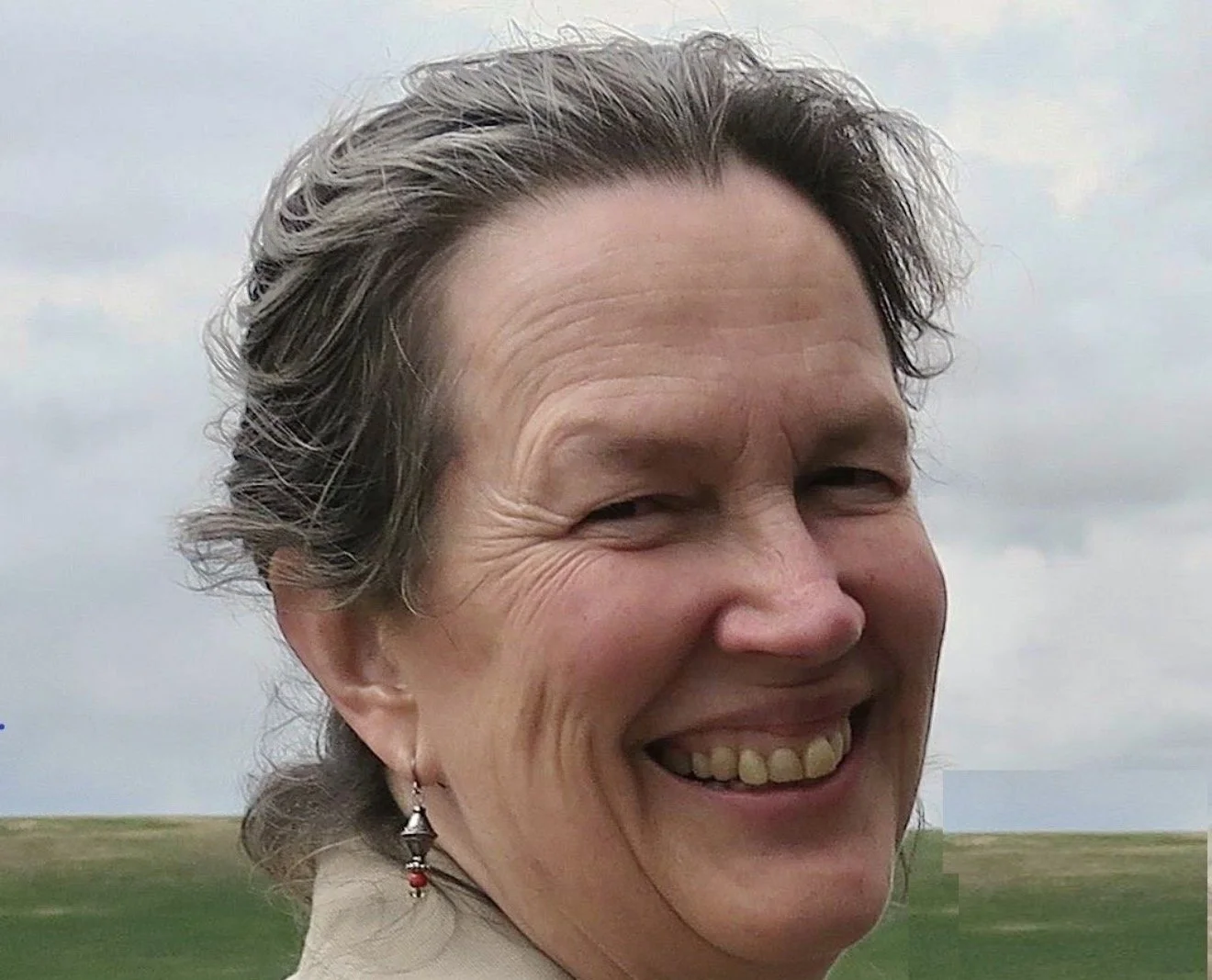
In this episode, our podcast host Richard Davies has a lively and fun 40 minute 1:1 Conversation with Sue Lani Madsen about their red/blue, rural/urban differences. Along the way, they learned a lot of interesting things about each other.
One week before America celebrates its 250th birthday, Braver Angels will hold its annual convention in Philadelphia, the city where the Declaration of Independence was signed in 1776.
More than one thousand citizen delegates— Blues, Reds, and Independents— will be in the same place together over four days, June 25-28. They will honor the final words of the Declaration's authors: “we mutually pledge to each other our Lives, our Fortunes and our sacred Honor.”
In Philadelphia “we will figure out how to renew that pledge to strengthen our civic bonds together,” says podcast guest, Convention Director Mark Metzger. “The theme is 1776-2026, a pledge renewed. We’re looking at what that pledge meant… at the start of the new nation, and what it means to us today.”
America’s 250th anniversary focuses national attention on who we are as a nation, and who we hope to become. The Braver Angels Convention will play an active and engaging role in this national endeavor. The Declaration was not only a statement of independence from Great Britain, it was also a declaration of dependence on one another.
The nation has been shaken by violence yet again. The assassination attempt at the White House Correspondents Dinner was another jarring tear in the fabric of our public life. Every day Americans also hear divisive, angry, rhetoric from national political leaders and media pundits.
On "How Do We Fix It? we discuss how growing numbers of Americans are pushing back against toxic divides.
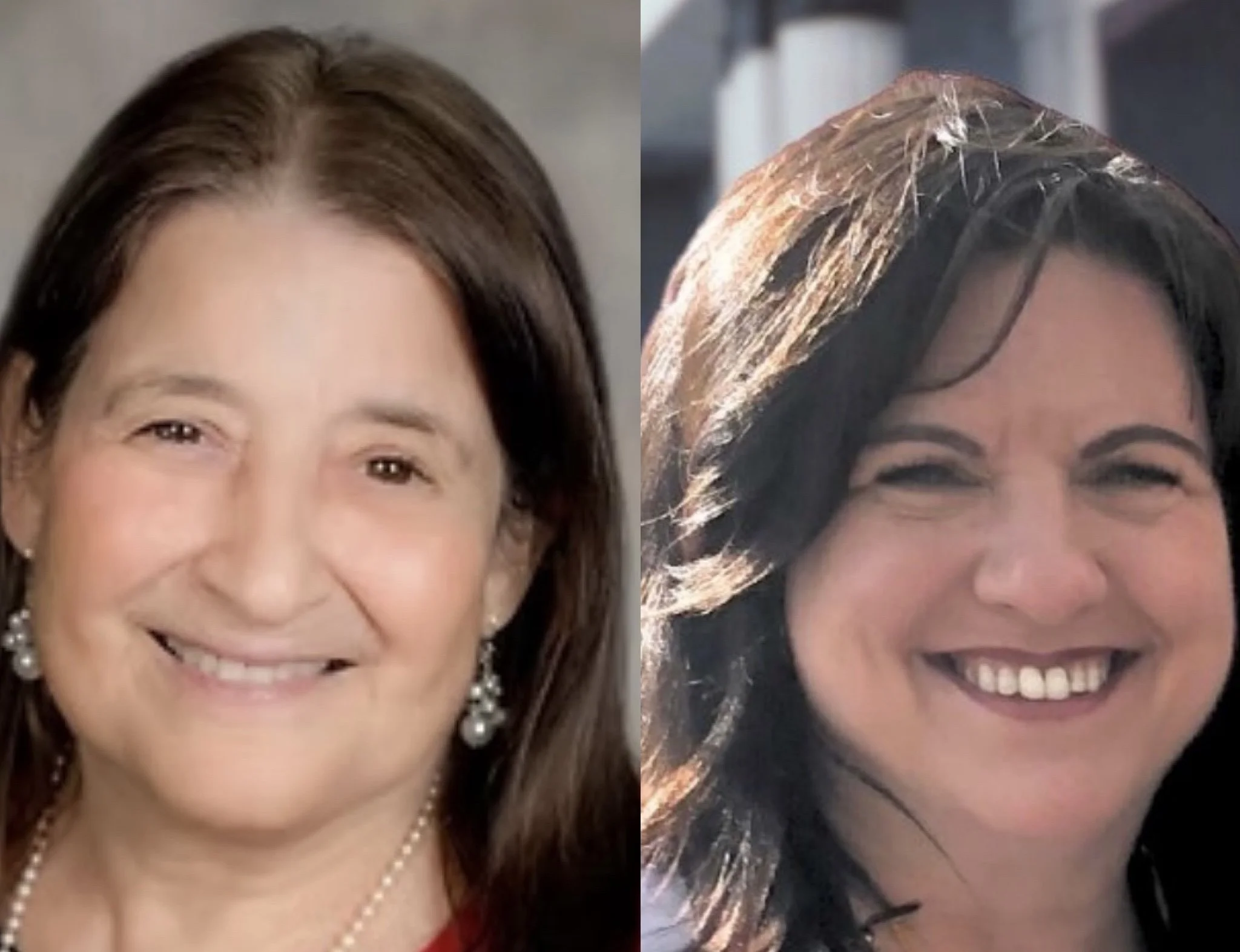
We report on the work of Braver Angels: The national movement that brings reds and blues together in the same room. This episode with Reena Bernards and Casey Jorgensen covers the Braver Angels Mobile Summit in Utah, a traveling conference where practical steps were taken to build bridges and cross divides.
Volunteers drove an RV across Utah, and also ran in-person events where red and blue citizens worked together on polarizing issues such as immigration. Two mobile summits in late 2025, and again in the spring of this year, featured workshops, debates and dialog. The aim was to depolarize communities and strengthen civic engagement.
"It was a wonderful experience," says Reena. "We became like a family."
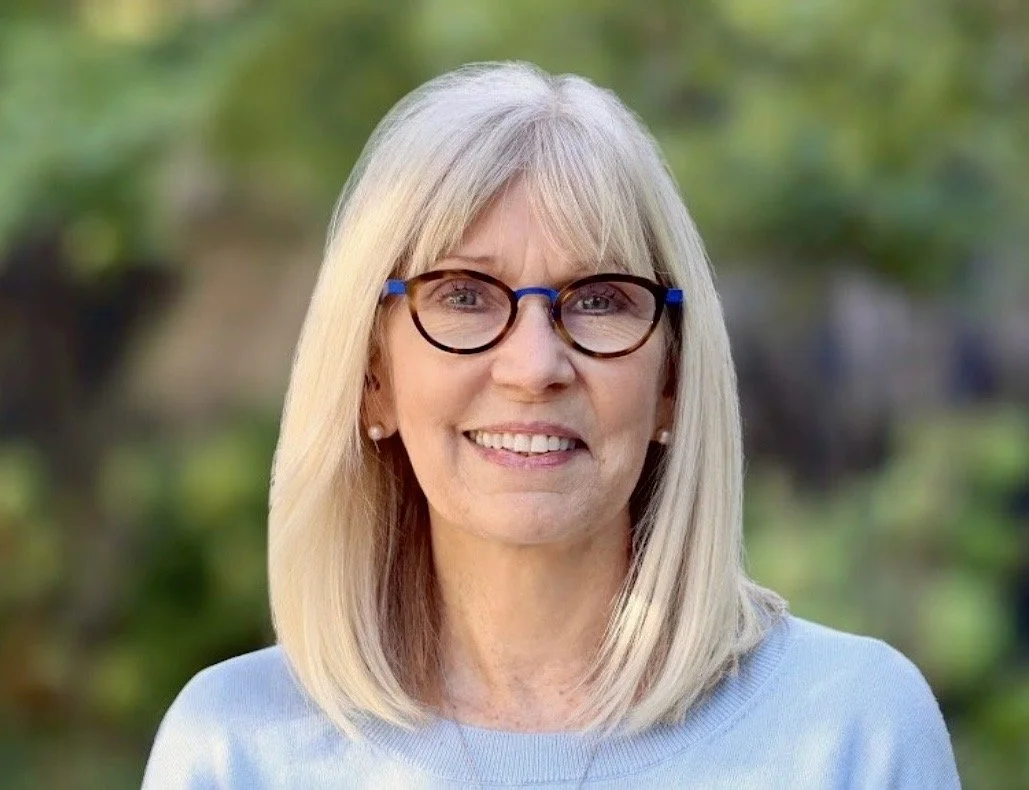
Right now is a really difficult time to convince Americans to come together and listen to the other side. How can we be hopeful at a time of so much anger, division, violence and despair when our political leaders speak with such venom about their opponents?
“What we’re doing now is sorting into our tribes and silos,” says our guest Maryanne Colter, state coordinator for Braver Angels of Illinois. With curiosity and humility she works to physically bring people of opposing views together in the same room. “This is where the magic happens, when we can sit across the table and treat people as human beings.”
Here we learn about different types of Braver Angels workshops and how they often surprise and change the perspectives of those who take part. “That’s what brings me hope,” Maryanne tells us.
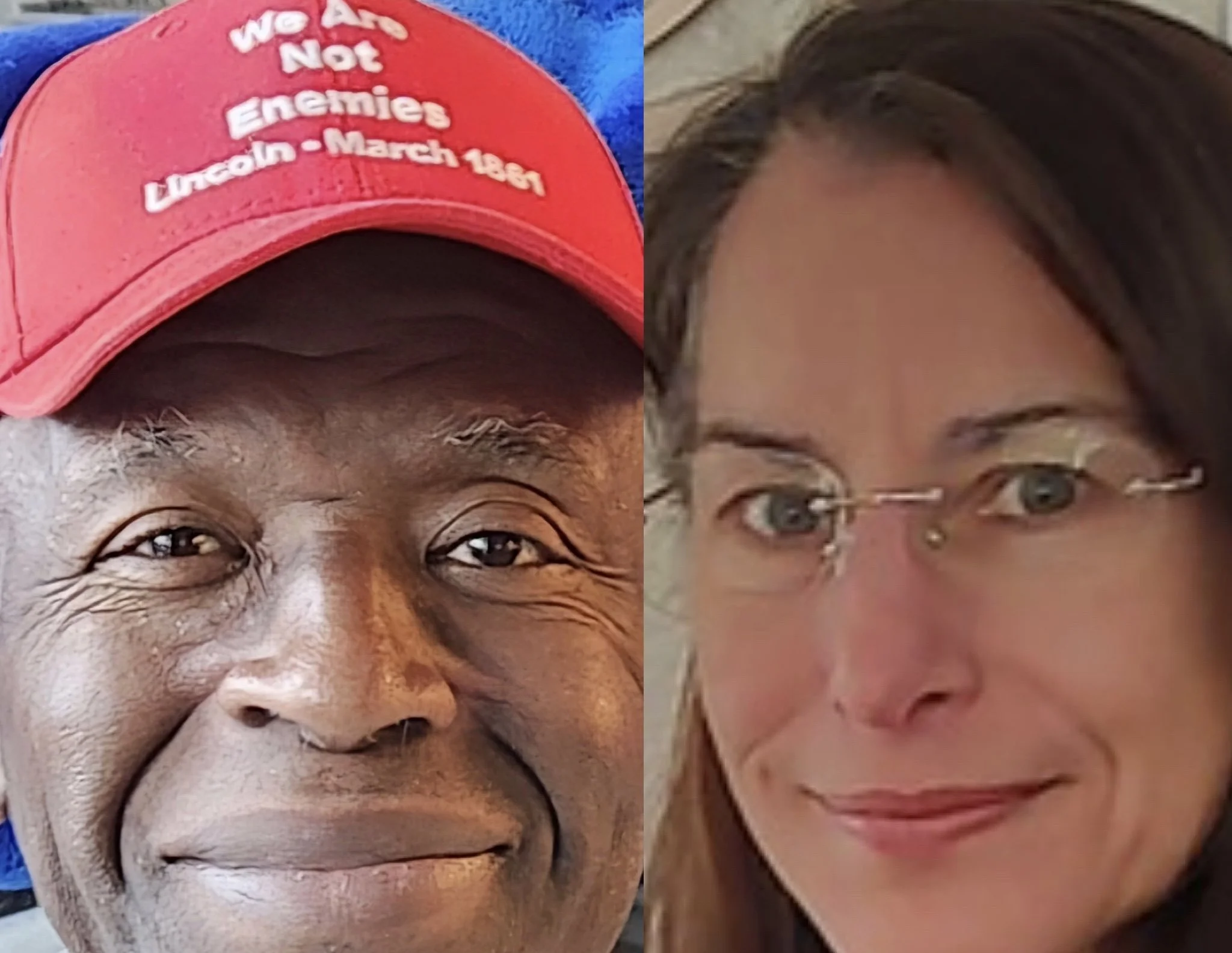
Braver Angels Ambassadors are among the most courageous of courageous citizens.
Not only do they bridge the partisan divide, these volunteers meet people where they are. At meetings and events across the country, they go speak about Braver Angels as they try to convince skeptics that rebuilding civic trust is a cause worth supporting.
In this episode, we hear from Barbara Hancin and Ron “Sugar Bear” McFarland, volunteer co-chairs of the Braver Angels ambassadors program.
“What we’re were doing is giving hope to people,” says Barbara. “We don’t have to stay in the rancor. There are ways to build bridges and we’ll help you do that.”
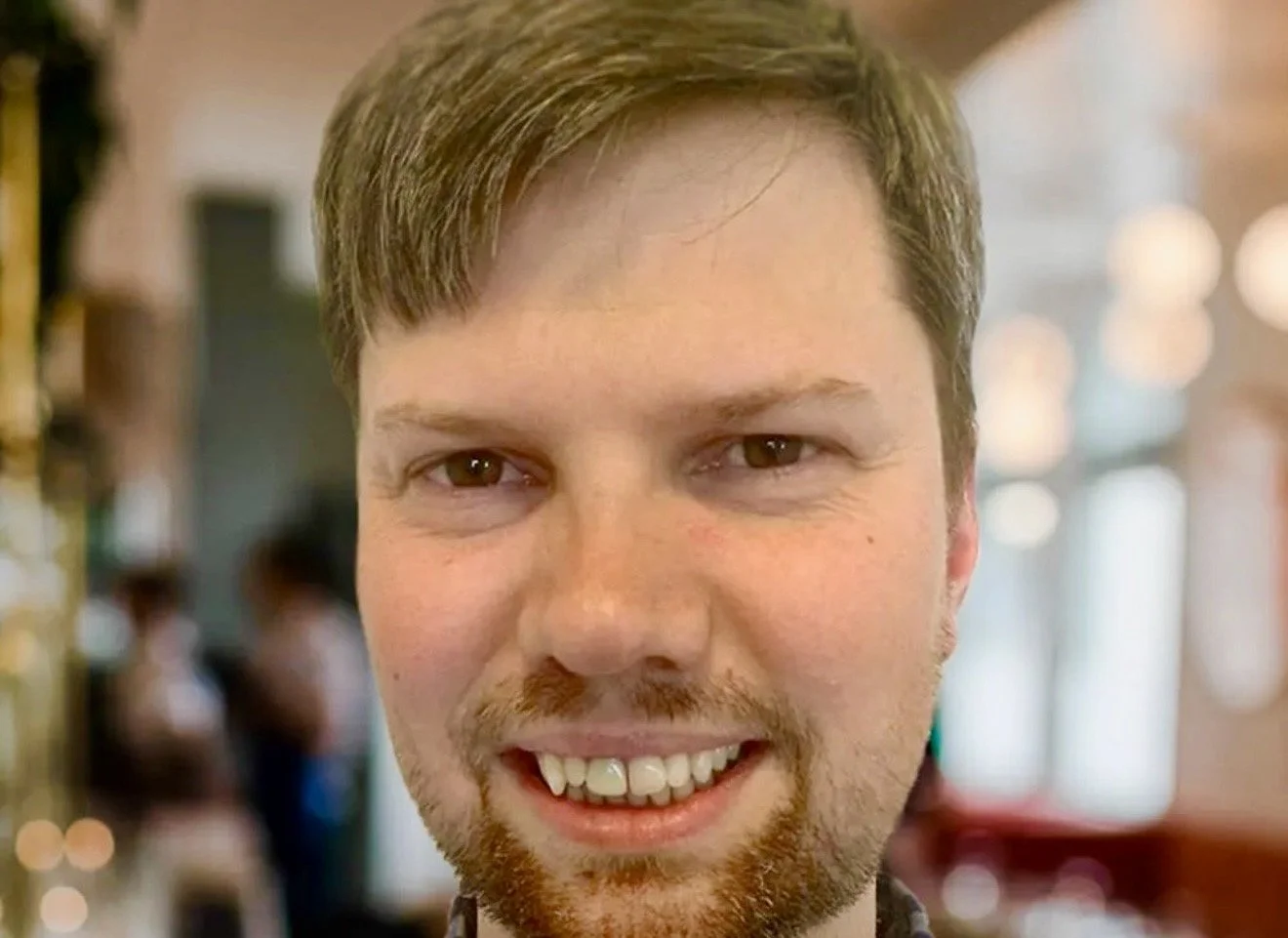
Is it possible to find points of agreement on some of the most heated and divisive issues in American politics? Can people who profoundly disagree sit down and learn from each other? The answers to both questions is an emphatic "yes!".
In this episode we hear about the current work of the Citizens Commission on Immigration from its Director, Braver Angels co-founder, David Lapp.
The goal of the Citizens Commission is to demonstrate to Congress and the nation that Americans with differing views on immigration can find common ground. The Commission works in a red/blue balanced way and includes Americans from all sides of the issue. Over the past two years, grassroots Americans and national experts and advocates of all sides of the immigration issue have met together.
"There have now been about 50 immigration events across the country," David tells us. "We can find some meaningful areas of agreement." Large majorities of participants from the left and right agree on the need for secure borders, and believe that businesses should face penalties for hiring undocumented workers. Some agreement was also found on a pathway to citizenship for "Dreamers" who came to the US as children.
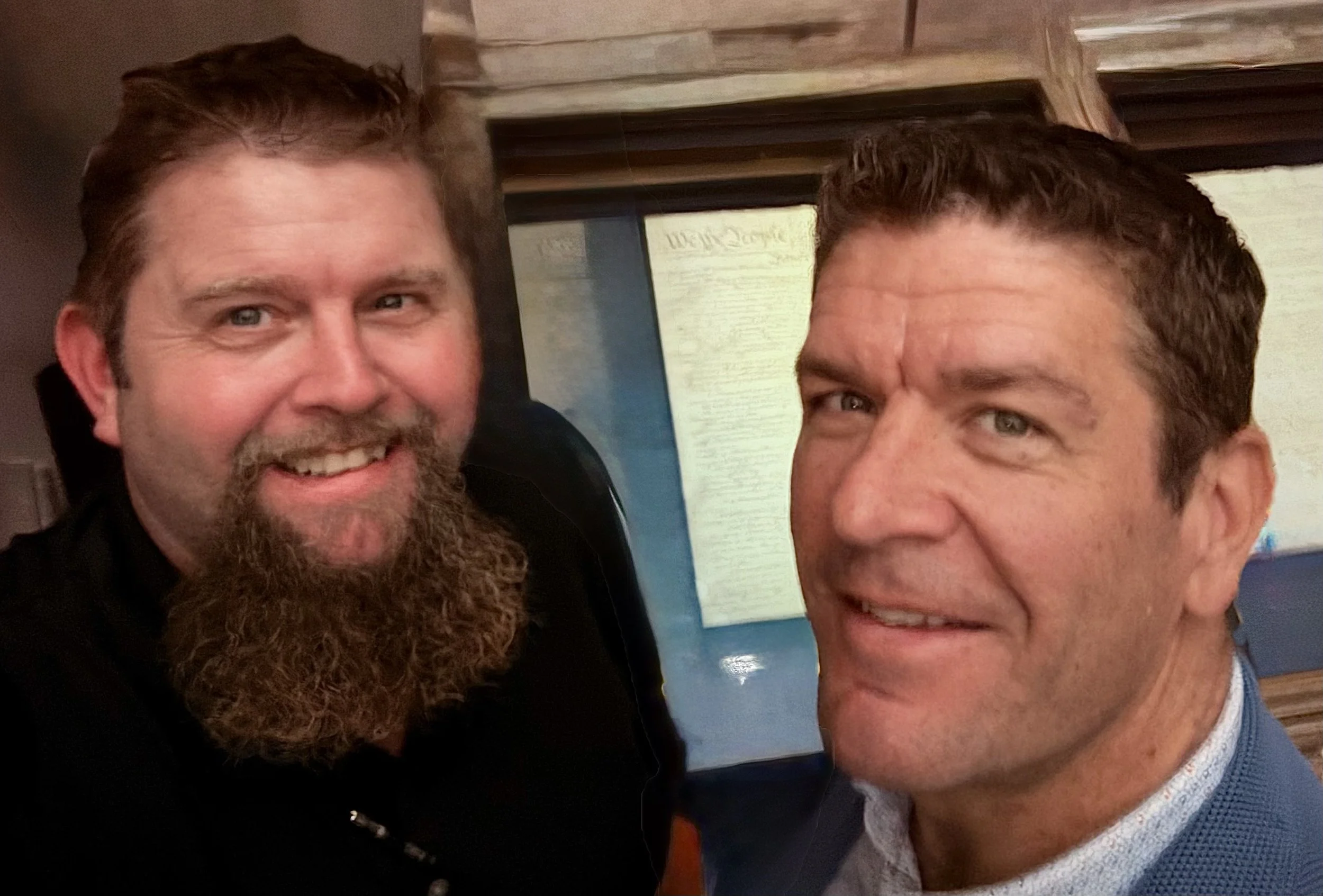
Conflict entrepreneurs get money, influence and power by sparking anger and outrage. The Braver Angels call for courageous citizenship does precisely the opposite. In this podcast we hear the case for citizen power not paralysis, action not reaction, and why building America's civic muscle is so much better than burning things down.
Here is a passionate, thoughtful and curious conversation between Braver Angels C.E.O. Maury Giles and Wilk Wilkinson, Director of Braver Angels Media Operations. Both came to their work with the campaign after years in the private sector. Maury and Wilk are conservatives in a movement where a majority is either independent or leans blue.
Our episode is the latest in more than two dozen "How Do We Fix It?" discussions on the people, projects and ideas of America's largest organization committed to civic renewal and building trust across partisan divides. The edited recording was first published in longer form by Wilk's podcast, "Derate The Hate".
The recent immigration crackdown in Minnesota that led to several thousand arrests, mass detentions, angry protests, deepening political divides, and the deaths of two US citizens in Minneapolis is coming to an end.
What’s life been like for the residents of the Twin Cities during the recent surge of at least three thousand ICE agents on the streets? How will Braver Angels and other groups who work to reduce toxic political divides show up going forward? We consider these and other questions in this special episode of “How Do We Fix It?”
Our guests are two leading members of Braver Angels Minnesota, Melinda Voss who leans blue, and Scott Schluter who leans red. Both say this has been a time of elevated emotions, anxiety and fear for public and personal safety.
If we’re going to get out of the political mess that we’re in right now, we will need a lot of help from Gen Z. Young people inherited our broken civic space, and they’re ones who will be the courageous citizens who reimagine it.
In this episode we learn from two former Braver Angels debate interns, Natalie LaRoche and Genevieve Raushenbush, about the skills, energy, and passion students and young people bring to the movement to depolarize politics. We also hear from them about they have learned at Braver Angels.
Natalie LaRoche is the program manager for the Debate Team. Natalie was an intern in late 2021 and joined the Braver Angels staff a year later. She holds a BA in Government at Smith College.
Genevieve Raushenbush was a recent intern at Braver Angels. Now she works at Sway, a start up focused on mobilizing citizen-led voting groups. Genevieve holds a B.A. in Economics from Harvard University and in 2025 was a legislate intern on the Hill. Both women are in their mid-twenties.
For many Americans, taking part in a debate is just about the last thing they’d put on their dance card.
But Braver Angels debates are different. In this episode Sam Rechek explains why.
“Braver Angels debates are fun,” Sam tells us. “We’ve created a structure where people can have productive disagreements about contentious issues. That’s something many yearn for, and they get interested in really fast.”
Unlike most debates, there are no “winners” or “losers”. Speakers at Braver Angels debates are often passionate, but they can’t interrupt or be snarky about the other side. Compelling arguments are made on both sides in a respectful way. Different viewpoints about an issue are warmly welcomed, but all comments must be addressed to the chair, not directly to the person you disagree with.
Pick a controversial topic. Whether it’s immigration, race, climate change, the role of religion, or the economy, many of our assumptions that we view as completely reasonable can seem whacky or wrong to others. This may well include very smart, thoughtful people, who’ve had very different life experiences than our own.
Our guest for this episode is Chauncey Williams, a Democratic-leaning Braver Angels volunteer in Denver.
He was shocked when Donald Trump was first elected President in 2016. But instead of retreating into his political silo, Chauncey began a unique project. On different occasions he set up a table with two chairs in local parks, and invited total strangers to have conversations about important public matters.
“One of the important things I came to realize is that I walk into a lot of those conversations with a host of assumptions about folks that aren’t always true,” Chauncey told us.
More than at any time in our nation’s history, news coverage of politics and public events is dominated by national media, but many of the solutions to Americans toxic partisan divides are to be found at the local level.
In this episode we hear from Steve Saltwick, the inaugural Senior Fellow of Braver Angels, and founding conservative co-chair of the Braver Angels Central Texas Alliance.
Steve is one of the leading lights of Citizen-Led Solutions, a new Braver Angels nationwide initiative that equips communities across the country to find common ground through building trust and solving contentious issues. Citizens of many different backgrounds and opinions are directly involved.
Many people say Thanksgiving is their favorite holiday: No cards to be sent. No presents to be purchased. A pause with family and close friends before the year-end holiday rush.
Thanksgiving is about gratitude, but it can also be a time of anxiety, and even dread. What do you say to family members, friends and neighbors who vote for a candidate or political party you despise? How do you react when they launch into a rant or say something that you find offensive? We share tips about how to disagree better with those you love.
Our guest is Braver Angels National Advisor Mónica Guzmán, author of the book “I Never Thought of It That Way: How to Have Fearlessly Curious Conversations in Dangerously Divided Times”. Móni is the liberal leaning, loving daughter of conservative parents. She’s had a lot of personal experience of connecting with people not like her. We hear several examples in this episode.

Just over three months into his new role as leader of Braver Angels, we hear from CEO Maury Giles about his hopes, plans and goals for America's largest volunteer-led movement working to bridge partisan divides and disagree better for the common good.
“America has lost much of its civic muscle, and it's time to get it back”, Maury tells our host, Richard Davies.
Rising polarization, declining trust in public institutions and the media, the spread of misinformation, the longest-ever government shutdown, and recent political violence are all signs that something is deeply wrong with our public square.
"We're trying to help people understand first and foremost that the choice you have to make is that of personal agency: To say am I going to act or react?,” Maury says.

Liberals and conservatives are caught in a politically toxic feedback loop. Our guest, Zachary Elwood, argues that when people express contempt for those on the other side, they contribute to a cycle of conflict that weakens our nation.
Increasingly, Americans view polarization as a worsening crisis. Two-thirds say the political system is too divided to solve the nation’s problems. A New York Times - Siena University poll found that many more people now believe the system is broken compared with five years ago.
Elwood explains that Americans don't just disagree on issues. We increasingly view our political adversaries as immoral, deluded, and dangerous. Our fear and contempt affect our stances on issues, making us more hardened in our views and less willing to compromise.
Zachary Elwood is the author of two books on toxic polarization. The first was “Defusing American Anger”. On this podcast we hear all about his latest: “How Contempt Destroys Democracy”. The new book is written by a left-leaning author for members of his own side, who mostly believe that President Trump is a threat to democracy.

How do we help people see their common humanity and find common ground? We discuss this and much more with our guest, independent filmmaker and storyteller, Swati Srivastava.
At a time of polarization and deep political divisions in America, growing numbers of citizens are now pushing back against the fear, loathing and distrust that poison our national conversation. Our podcasts report on the people, projects, and ideas of this movement.
Swati Srivastava is Director of Visual Media at Crossing Party Lines, a non-profit group that facilitates conversations among Americans of different opinions. She established the group’s Long Island Chapter and is also active with Braver Angels. Her short video, “The Braver Angels Way” is designed to be played at the start of Braver Angels conversations and debates. Find out more about Swati’s film and storytelling projects here.

“Our political leaders— left, right, and center— have a thin view of citizenship,” says Braver Angels co-founder Bill Doherty. He argues that everything from healthcare and education to public safety and politics “is the work of we the people. That’s the robust idea of citizenship…Ultimately the big problems are those of all of us”
This episode features an interview recorded for “Derate The Hate”, a podcast hosted by Wilk Wilkinson in collaboration with Braver Angels, the nationwide movement that brings citizens together across political divides, and pushes back against grievance, outrage and toxic polarization.
As Wilk writes in his show notes about this interview: “This is not about partisan politics—it’s about restoring a sense of shared responsibility in our communities through intentional dialogue and real problem-solving.”
Bill and Wilk discuss a new definition of citizenship and other topics, including how structured conversations can transform toxic divides, and why personal accountability is essential in civic life.

Americans are divided by geography. Most of us live in overwhelmingly red or blue Congressional Districts. We are less likely than ever to know someone from the other side of the political spectrum. We are often misinformed about what members of the other tribe actually believe.
In this episode we speak with Kirk Tatnall, Starla Brown, and Cade Smith about a Braver Angels exchange program. Participants from New York City and Jackson, Mississippi visited each other over two weekends. They held workshops and meetings, engaging in discussions across differences.
“I just have a fundamental underlying belief that you cannot understand someone else unless you know them,” Kirk Tatnall told us. “You cannot really get to the motivations and the passions and the drive of other people until you see how they live.”

Political speech in America is all too often dominated by hyperbole. We don’t just disagree, we find those on the other side to be offensive or even worse. All too often the language of curiosity, nuance and humility is missing from our dialog.
In this episode we look at a novel way to reach across the divide. During the spring, Minnesota Braver Angels leaders who live in the Minneapolis-St. Paul region decided to visit six small towns in rural parts of the state. Our guests are Melinda Voss, who leans blue, and Scott Schluter who leans red.
We find out what they learned while on the nine-day "Reduce the Rancor" bus tour. Melinda, Scott and other volunteers organized a series of events, including workshops, meetings with local community leaders, and conversations with people in six towns. They also did a lot of listening.
(pictured above: Scott and Melinda with Otto the Otter, the world’s largest otter, while on the bus tour in Fergus Falls MN).
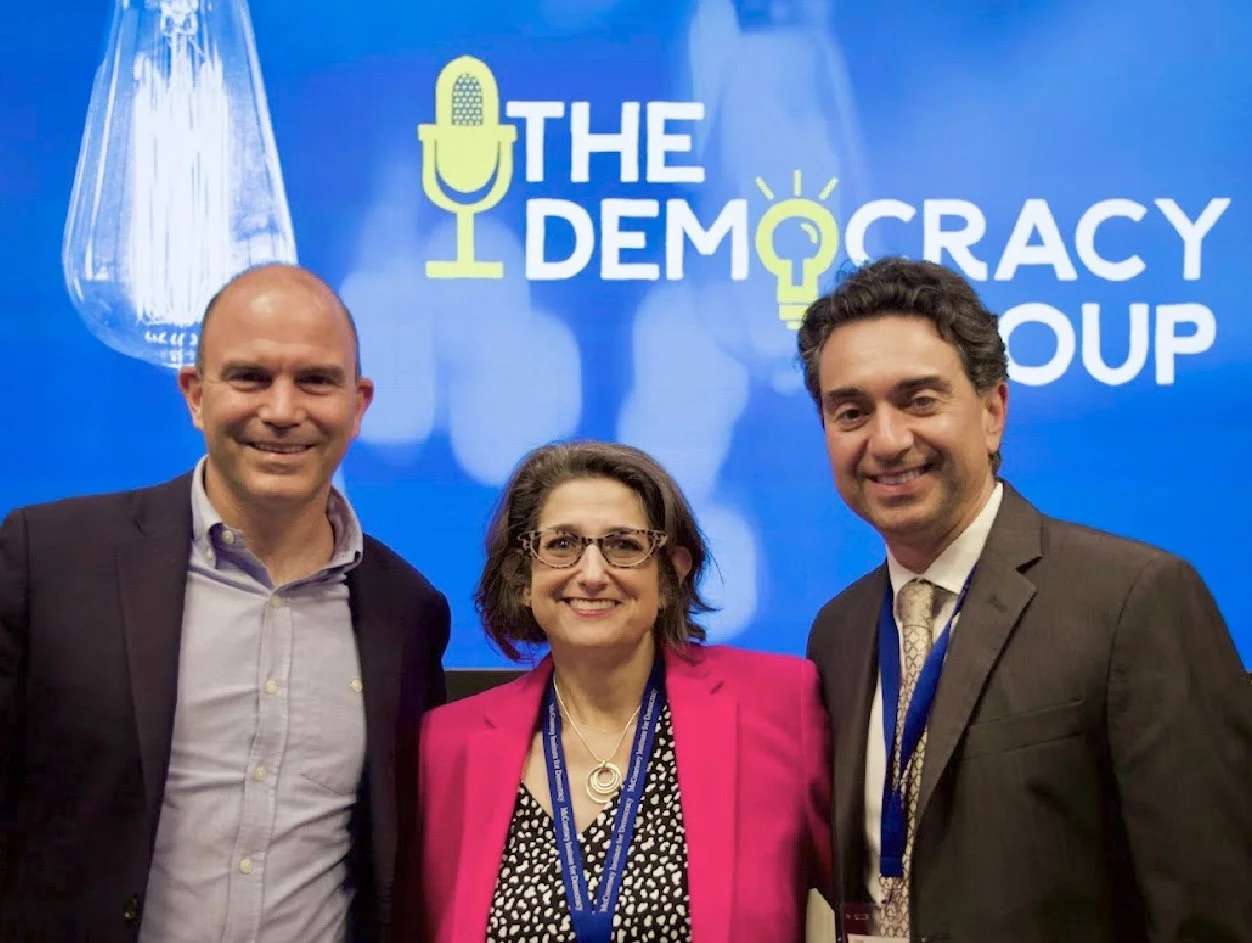
What is America’s role in a dramatically changing world? How does the health of our democracy impact other nations? In this episode we hear a rich mix of ideas in a conversation with podcaster, commentator, and former U.S. Deputy National Security Advisor Ben Rhodes.
“Young people today are going to have to imagine a new US government and a new set of international institutions,” says Ben. A future administration “will have to renegotiate the terms of a new international order.”
This hour-long episode is a recording of a live event held on May 22 in Washington D.C., produced by the Democracy Group and The McCourtney Institute. “How Do We Fix It?” is one of eighteen network members of Democracy Group, which features podcasts about civic engagement, civil discourse and the future of our democracy.

If you’re disturbed or simply turned off by America's rigid political divisions this is the show for you. We discuss creative skills and practices that put a little hope back in your political life
Doug Teschner and Beth Malow are co-authors of the forthcoming book "Beyond the Politics of Contempt: Practical Steps to Build Positive Relationships in Divided Times." Their work builds on what they've both learned as bridge builders and Braver Angels volunteers. They also write about their work on Substack.
Imagine a country where people of opposing political beliefs and different social, geographical and educational backgrounds get along pretty well, and manage to make progress together on vital issues that they care about. Our two guests show how it can be done.
"We've always had debate and disagreement," Doug tells us. "The concern now is that this has become personalized. If you don't agree with me that means you're evil." People should disagree, but when it's about "us versus them, this is really dangerous for our country."

Ten years ago this month we launched our first show at a time of new beginnings for podcasts. We were early to this game, and well before podcasting became part of mainstream media.
In contrast to other shows about politics and current affairs we ran against the grain, avoiding snarky slogans and angry attacks. How Do We Fix It? focused instead on solutions journalism and what might be improved if we listen carefully to others who we don’t agree with. We urge listeners to get out of their comfort zone.
Right from the start, co-hosts Jim Meigs (leans red) and Richard Davies (leans blue) embraced nuance and celebrated the ideas of contrarians and compromisers alike. Their weekly podcast partnership lasted nine years. Together in this episode Richard and Jim consider a range of ideas that we have discussed.

We release this show at a moment of high political drama. Economics, financial markets, and America’s relations with the rest of the world are in a state of tumult. So how on earth do we talk with and listen to people on the other side? Should you even try?
Jessie Mannisto, Director of Debates at Braver Angels says “yes!”
In this episode we learn why understanding those who you disagree with is a vital first step to repairing civic relations. We discuss the First 100 Days Debates: “Is President Trump Making America Great?” Braver Angels is holding a series of structured debates this spring on birthright citizenship, DEI, foreign policy, the limits of executive power and more.
Everyone has an opinion about the President and his Administration. “Right now we are all in some way emotionally activated, whether with triumph or with fear and anger,” Jess tells How Do We Fix It? host Richard Davies. “At Braver Angels we are coming together to try to live well in a polarized time.”

I don’t do this work in optimism. I do it in hope”, Braver Angels President David Blankenhorn tells our podcast. “If we’re going to have any chance to fix this and save our country, this is what needs to be done.”
Soon after the tumultuous 2016 election Braver Angels sprung to life— co-founded by David, Bill Doherty and David Lapp. Two years after its founding this nationwide volunteer-led citizen movement had its first convention attended by 72 conservative and 72 liberal delegates. Last summer, more than 750 reds and blues were at the Braver Angels national convention in Kenosha, Wisconsin.
In the past few years Braver Angels workshops, debates, and other events have been held in all 50 states. The work continues every day all across America.

What do you think of people who you totally disagree with about politics? Can you listen to their point of view and have a constructive conversation? Do you dismiss the other side as evil or deplorable?
In this episode we hear from Wilk Wilkinson, a Christian conservative who voted for Donald Trump. He has working class roots and grew up poor. A decade ago Wilk was enraged at liberals, but today he’s working closely with both reds and blues at Braver Angels to turn down the volume on loathing and distrust.
“There’s no reason why I can’t have civil conversations with people on the blue side”, says Wilk. “We cannot get stuck in this idea that just because politically we don’t see eye-to-eye we are enemies.”

In the five years since the COVID pandemic began, trust in public health institutions and vaccines has plummeted. According to a new opinion poll, just over half of the public now says they trust the Food and Drug Administration to make the right recommendations on health issues at least “a fair amount,” down from nearly two-thirds (65%) in June 2023.
About 1 in 4 Republicans parents now say they’ve akipped or delayed some children’s vaccines.
"Why Should I Trust You?" is a new podcast about why so many Americans have lost trust in science and public health. We hear from two of the show's co-hosts, journalists Brinda Adhikari and Tom Johnson. They speak about what they've learned from a remarkably broad range of skeptics, scientists and doctors who have different opinions about vaccines and public policy on healthcare.

How Do We Fix It? raises questions about solutions to divisive topics of politics and public policy: Decidedly secular matters. In this episode we look at how religious groups and institutions can help bring people together across divides. Braver Faith is our focus. The Right Rev. Mark Beckwith is our guest.
Braver Faith is one the newest and most vibrant groups within Braver Angels— America's largest cross-partisan, volunteer-led movement that works to push back against rigid polarization. Led by faith leaders from many different religious backgrounds and beliefs, Braver Faith is a civic organization that develops educational tools to build bridges between people who are divided over politics.
Mark Beckwith speaks with us about the group's goals and principles. "So many people that I talk to within Braver Angels tell me their commitment emerges from their particular faith", he tells us.

In the fall 2024, a young British filmmaker jumped in a small car and drove across America, asking more than 200 strangers the same two questions: "How did we lose connection with our neighbors, and how do we get it back?" Many of the answers and explanations are fascinating.
"I am a firm believer that developing a curiosity or a curiosity in strangers is the cure for a polarized and isolated world," says Joseph Sim, the director and producer of the new documentary, "A Road Trip Across a Divided America."
In this podcast we also hear from experts, everyday citizens and members of Braver Angels, who gave Joseph renewed hope that America can overcome the toxic divides that currently poison so many friendships and family relationships.

The holiday season is here, but many people across the country may dread sitting down with their nearest and dearest— all because of politics.In this episode we share down-to-earth advice from two wise experts who have thought deeply and creatively about how to minimize conflict and maximize cooperation with parents, family, and friends.
Tania Israel is a Professor of Counseling Psychology at the University of California, Santa Barbara and award-winning author of "Beyond Your Bubble: How to Navigate the Challenges of Living in a Divided Nation".
Arthur C. Brooks is Professor of the Practice of Public and NonProfit Leadership at the Harvard Kennedy School. We discuss the findings of his book "Love Your Enemies: How Decent People Can Save America From the Culture of Contempt".

Some wore red hats, others wore blue. Outside scores of polling places in many states across the country, pairs of Democrats and Republicans sat together in a radically simple experiment called the Braver Angels Election Day Initiative.
The contrast between dire media forecasts of violence, and calamity during the election and what actually happened was stark. The day passed by calmly with minimal reports of disruption. There was a sense of quiet majesty that day.
In this episode we hear about the experience of three Red/Blue pairs of Braver Angels volunteers. For all of them the experience of presenting themselves in public as liberals and conservatives who could get along was uplifting. We also get reactions and reflections about the results and what they mean for our democracy.

Do you believe what you see in newspapers, websites and on TV? Most Americans don't trust the people who are supposed to truthfully report the news. A new Gallup poll says Americans have record-low trust in mass media. Only one-in-three adults has a "great deal" or a "fair amount" of confidence in the media to report the news "fully, accurately and fairly."
More than 150,000 readers each day turn to Tangle, a website read by liberals, conservatives and independents. Every day Tangle tackles one current debate in American politics, and summarizes arguments from left, right, and center. All Sides Bias Checker gives Tangle a "middle" rating, which means the site neither leans left nor right.
Our guest, politics reporter Isaac Saul, started Tangle in 2019 as an independent, ad-free, nonpartisan newsletter. He grew up in Bucks County Pa. — one of the most politically divided counties in America — where he was exposed to a huge range of political opinions and values. As a young journalist, Isaac learned the media ecosystem was broken when he found that he wasn’t being judged based on his writing, but where it was being published.
Are you fed up with politics and especially the presidential campaign? On How Do We Fix It? we're reporting on the people, projects and ideas of Braver Angels. This nationwide citizen-led movement is a growing coalition of liberals and conservatives working to restore hope and co-operation to our politics.
In this episode we speak with a second pair of Red-Blue volunteers who will be working together and meeting voters outside a polling site on November 5th. It's all part of the nationwide Election Day Initiative. Our guests are Elizabeth Doll and Don Goldberg. On election day, they will be outside King County Election HQ in Renton, Washington.
"The other is not necessarily the enemy", Don tells us. "They just happen to be another side." Elizabeth agrees and hopes that one result of the Initiative is that Americans "recognize people can be friends... talk about politics with each other, disagree about politics, and still be in relationship with each other."

These final days before the election are tense times. Today’s toxic politics are hurtful and heart breaking for many of usMaybe we all need a hope vaccine. An injection of kindness, curiosity and understanding for those who see the world differently than we do.
In our latest report on the work, ideas, and people of Braver Angels, the nationwide citizen-led campaign against political polarization, we learn more about its Election Day Initiative: A volunteer-led effort to push back against political climate change— the hurricane of hate resentment and disdain that many on the left and right feel for the other side.
Our guests in this episode are liberal Dorsey Cartwright and conservative Roger Haynes. They are two of many red/blue pairs of citizens who will sit and stand together outside polling places across America.
M. Dorsey Cartwright is a retired marriage and family therapist in Austin, Texas. She travelled internationally leading workshops for couples, individuals, adult children and parents, as well as for communities. Valuing the healing of relationships, Dorsey has turned her attention to America’s political environment. First as an active member of No Labels and its mission to depolarize the House and Senate, and then Braver Angels, with its mission to depolarize our citizenship. Her politics lean blue.
Elections are vital to all democracies: The authority of the government comes solely from the consent of the governed. But millions of Americans don’t trust the electoral process and have highly negative views of politics.. Many have little or no confidence that all votes will be fairly and accurately counted.
What should be done to improve our elections? We discuss reforms that both conservative reds and liberals blues can endorse. Some may surprise you, including ending gerrymandering and the unanimous recommendation on requiring ID to vote.
The Braver Angels Trustworthy Elections Initiative held 26 workshops with nearly 200 evenly-balanced Red and Blue participants. Together, they found 727 unanimous points of agreement.
Our guests are Larry Mayes and Walt McKee— the Blue and Red Co-Chairs of the Trustworthy Elections Leadership Team. They discuss their recommendations and what they learned together during the past four years.

Braver Angels is addressing a huge threat that could disrupt the future of our democratic republic: The rigid, often bitter, divisions between reds and blues. While nearly four in ten voters identify as "independent", more than nine in ten Americans fall into one of two broad categories. They identify as either conservative or liberal leaning and tend to vote for either Republicans or Democrats.
"If this country breaks apart, if violence increases to the point where we are killing each other, it will be because of those two groups and the extreme leaders of those two groups," says Braver Angels co-founder and President David Blankenhorn. "That's the division we are looking at. That's the bridge we want to build. That's what's threatening the country."
This episode is part two of our "How Do We Fix It?" podcast interview with David. We discuss Braver Angels bridge building by young people. Our conversation also explores America's political divisions and the Braver Angels approach to reforming and rebuilding American political discourse one conversation, one debate, one workshop at a time. In part one— our previous episode— we began by discussing the movement's origin story.

“I don’t do this work in optimism. I do it in hope”, Braver Angels President David Blankenhorn tells us. “If we’re going to have any chance to fix this and save our country, this is what needs to be done.”
Soon after the tumultuous 2016 election Braver Angels sprung to life— co-founded by David, Bill Doherty and David Lapp. Two years after its founding this nationwide volunteer-led citizen movement had its first convention attended by 72 conservative and 72 liberal delegates. This year, more than 750 reds and blues were at the Braver Angels national convention in Kenosha, Wisconsin.
In the past few years Braver Angels workshops, debates, and other events have been held in all 50 states.
In this episode, we hear from David about the Braver Angels origin story and much more. We also feature a brief update from Jessie Mannisto, Braver Angels Director of Debates, about her experience as a Braver Angels volunteer outside the DNC Convention in Chicago.

When renowned physician-scientist Francis Collins was about to have his first conversation with Christian conservative Wilk Wilkinson in early 2022, he admits that he had concerns. "I thought oh boy, this is going to be a tough one".
Dr. Collins had recently stepped down as Director of NIH— The National Institutes of Health.
He served under Presidents Obama, Trump, and Biden, and played a leading role in the federal response to the COVID pandemic. Podcaster
Wilk Wilkinson, who lives in rural Minnesota, was intensely critical of how the government handled COVID.
Today both Francis and Wilk are friends. They lead the Braver Angels' Truth and Trust Project. The goal is to build trust between ordinary Americans and the public health community in the wake of the pandemic. In each Truth and Trust gathering equal numbers of people from each side of the debate about what happened with public health listen carefully and express their views.

Toxic polarization is "the problem that eats all other problems... It's the sludge at the base of everything else," says our guest Mónica Guzmán. Think how much progress could be made on the great problems of today if politics were much more about discovering nuance than shouting slogans.
This show is our second episode on the work, people, and ideas of the volunteer-led cross-partisan campaign, Braver Angels. In the coming months, we'll report on their initiatives and projects.
Americans who are pissed off with politics are sometimes called "the exhausted majority." Many are tuning out toxic, divisive rhetoric that aims to settle scores instead of solving what's broken. Our guest, Braver Angels senior fellow Mónica Guzmán, has suggestions about how to be truly curious and have better conversations with those who see things differently.

This is our first in a series of new reports on the work, people and projects of Braver Angels— the largest volunteer-led group in the bridging community. The show was recorded a few days after the assassination attempt against Donald Trump. Our guests are Jessie Mannisto and Luke Nathan Phillips, who spent this week in Milwaukee, right outside the Fiserv Forum Arena, site of the Republican National Convention.
Since its founding after the 2016 election, Braver Angels has brought together many hundreds of Republicans, Democrats, and Independents to debate, discuss, and work together to bridge partisan divides. Jessie is Director of Debates at Braver Angels, and Luke is the Publius Fellow For Public Discourse.
In this episode we hear about the Braver Angels petition calling on party leaders to detoxify our politics, the mood of Republican delegates and protesters on the streets outside, the differences between media coverage of the event and what its like to be there, as well as responses to Braver Angels and its push back against polarization.

When we first started our podcast in the spring of 2015, Jim and Richard came from different political tribes. They still do. But during more than 400 shows they've deepened their friendship and learned a tremendous amount from each other, and our remarkable guests.
While "How Do We Fix It?" podcast will continue its journey, Jim and Richard's nine years as co-hosts ends with this show. We discuss why the partnership is ending (spoiler alert: it's amicable!) and what they discovered about podcasting, politics, and how to navigate divisions at a time of rigid, painful divides.
"I feel like when we started, we were a couple of voices in the wilderness, searching for more open-minded conversations, looking for people willing to grapple with facts and ideas that don't fit their comfortable world views," says Jim.

Supporters of Ranked Choice Voting argue that we need to a big change how we vote. Our “choose-one” elections, they say, deprive voters of meaningful choices, create increasingly toxic campaign cycles, advance candidates who lack broad support and leave voters feeling like our voices are not heard.
We examine the case for this form of proportional representation. Ranked Choice Voting could boost electoral turnout, reduce polarization, and cut the public cost of running elections. This relatively new reform is now being used in dozens of states, cities and counties. In 2022, Alaska implemented ranked-choice voting for the first time after a referendum revamped its elections.
Our guest, Rob Richie is cofounder and senior analyst at FairVote, makes the case for how it works and why RCV is a viable way to improve electoral politics. Right now, he says, we are in this "incredibly intense winner-take-all environment" in most states. Ranked-choice voting could change the equation.

Liberalism is out of fashion. You might say that it's under siege. From the populist right to the progressive left, liberal touchtones of limited government, personal freedom, the rule of law, and a mixed economy have come in for harsh criticism.
Liberalism is assailed by many critics, but it has not failed, argues Yale Political Science Professor Bryan Garsten. "A liberal society is unique in that it offers refuge from the very people it empowers" through "institutions and different political parties. This allows the rest of us to live undisturbed," he says. Supporters argue that this form of liberty most clearly elevates the liberal project.
In addition to his research and teaching, Garsten has written recent op-eds for The New York Times. His books include “Saving Persuasion: A Defense of Rhetoric and Judgement” and a collection of essays he edited about Rousseau and the Age of Enlightenment.

In much of the country local news has collapsed, threatening civic pride and a sense of community for countless towns and cities. This dramatic change has also deepened America's divides.
As our guest, journalist and public policy researcher Anna Brugmann explains in this episode, "the internet disrupted the local journalism model". Newspaper advertising revenue fell 80% since 2000. Thousands of local and regional publications closed. Most surviving newsrooms faced drastic cutbacks. Coverage of all kinds of local events— from city hall, school board meetings and football games to local businesses and zoning decisions — disappeared.

Diversity equity and inclusion: Sounds like a good thing in an incredibly diverse country such as ours, especially when teaching young people at American colleges and universities.
But the DEI industry - or DEI Inc. — has arguably gone off the rails. There’s a big difference between the intentions behind a lot of diversity training and the results. We learn about the crucial difference between training and education, and hear the case against the Stop WOKE Act in Florida.
History professors Amna Khalid and Jeff Snyder share their deep concerns about a growing industry. There is no reliable evidence that diversity, equity and inclusion training sessions at colleges, non-profits, and large corporations actually work. In many places, DEI could be making things worse, imposing an ideological litmus test and encouraging cynicism and dishonesty at places of learning.

News coverage of Super Tuesday and other party primaries focused mainly on base voters— Democrats and Republicans. But most Americans are actually on the political sidelines or somewhere in the middle. Many have a mix of conservative and liberal views.
This episode is about them. Our guest is Shannon Watson, the Founder and Executive Director of Majority in the Middle. Her Minnesota-based non-profit group works to give voters and elected officials a place to gather outside the extremes. "We try to elevate the people who are demonstrating the behavior we want to see", Shannon tells us.
"When it's only the rabble rousers who get the coverage then there is an incentive to be one of them." Majority in the Middle also promotes structural changes in governing that will remove barriers to cooperation across the political aisle.

Only four-in-ten Americans say they have a lot of trust in the news media. That's a big problem for our democracy, especially in this volatile presidential election year. While journalists are supposed to tell the truth and get the story right, just 35% of right-of-center voters have some trust in what they see on the news.
Democrats and independents are much more likely to trust journalists, but Americans of almost all shades of opinion are skeptical of the journalists, not only questioning the quality of their work but the intentions behind it.
Our guest is Joy Mayer, Director of the non-profit group, Trusting News, which has partnered with many local newsrooms around the country to help journalists earn consumers' trust.
While many reporters, writers and editors are reluctant to discuss their politics, most journalists have liberal or progressive views. "I think it's something we need to talk about more openly," Joy tells us.

What is the point of a good education? Do we need it to learn a narrow set of skills ro help us get ahead in the workplace, or should knowledge and learning to be used over a lifetime to acquire wisdom that enables us to think more deeply about our place in the world?
This question has profound resonance at a time of angry divides over American politics and moral confusion at elite American universities. The President of Harvard, Claudine Gay, resigned after months of campus unrest and controversy. In December, Gay and two other university presidents faced widespread criticism for their testimony at Congressional hearings about antisemitism on their campuses.
In this episode, we hear from a university educator who makes the case for liberal education that gives students the tools needed to have a deeper sense of purpose. Roosevelt Montás is the author of "Rescuing Socrates: How The Great Books Changed My Life And Why They Matter For a New Generation".
He believes that the ideas and writings of Plato, Socrates, Shakespeare, Ghandi and many others aren't just for a few privileged students. They're for everybody, and that encountering these thinkers as a poor immigrant teenager changed his life.

From the economy and prospects for a Biden vs Trump rematch to the future for global energy and artificial intelligence, Richard and Jim make their forecasts for 2024.
And we re-visit our predictions from exactly a year ago and report on precisely how we did. "It's sort of like weather forecasters and opinion pollsters going back and owning up to their mistakes," says Richard. "I mean, who often do we see that!"
Once again, Meigs and Davies make their best guesses about what's to come this year. Will Donald Trump maintain his slim lead in the polls over President Biden? Is there a much higher risk than most experts expect for energy supplies during the winter months? How big are the chances for a wider war in the Middle East?

We continue our discussion with Yascha Mounk, one of the leading public intellectuals of our time. The subject is a hugely influential ideology that attempts to put racial, sexual and gender identity at the center of our social, cultural and political life. The "identity synthesis", Mounk argues, denies that members of different groups can truly understand one another and this stifles public discourse.
In this podcast episode we learn why an obsession with identity undermines social justice, fuels culture wars, and boosts hateful hardliners on the right and left— from Donald Trump to protesters who support Hamas and its murderous attacks on Israeli civilians. We also hear how to politely but firmly push back against those who have become ensnared in "The Identity Trap," the name of Yascha Mounk's new book.

Having skewered right-wing populism and its demagogues in his two previous best-selling books, politics professor, writer, and podcaster Yasha Mounk turns now to the threat posed to liberalism from those progressives who champion "woke" identity politics. We discuss his latest, "The Identity Trap: A Story of Ideas and Power In Our Time."
This episode— the first of two with Yasha Mounk — looks at the complex roots of a highly influential ideology based on personal identity— specifically race, gender and sexual orientation. These are said to determine a person's power, role in society, and how they see themselves. Mounk explains how the identity synthesis, which has become widely accepted in many universities, nonprofits and large corporations, had its origins in several intellectual traditions, including post-colonialism, postmodernism and critical race theory.
Our interview mentions ideas and concepts raised by Michel Foucault, Derrick Bell, Kimberlé Krenshaw, Edward Said, Gayatri Chakravorty Spivak, and others. We learn how these thinkers sharply criticized modern liberalism and the civil rights movement of the Sixties and beyond.

Yes, it's our 400th episode. But instead of looking back over the past eight-and-a-half years of our podcasts, we consider the future: How collective optimism or pessimism can have a huge impact on the economy, risk taking, and the acceptance of new technologies that spark growth and innovation.
Our guest is scholar and journalist James Pethokoukis of the American Enterprise Institute, author of "The Conservative Futurist: How To Create the Sci-Fi World We Were Promised."
In this episode he argues that in the decades after World War Two and during the space race, America was the world's dream factory. TV and movies helped to turn imagination into reality, from curing polio to landing on the Moon to creating the internet. In those years we were confident that more wonders lay just over the horizon: clean and infinite energy, a cure for cancer, computers and robots as humanity’s great helpers.
But as we moved into the late 20th century, we grew cautious, even cynical, about what the future held and our ability to shape it. James Pethokoukis says that this year— 2023— marks the 50th anniversary of the start of the Great Downshift in technological progress and economic growth, followed by decades of economic stagnation, downsized dreams, and a popular culture fixated on catastrophe.
Affective polarization in America – the gap between voters' positive feelings about their own political party or "side" and negative feelings toward the opposing party – has sharply increased during the past two decades.
We speak with two leaders in local government and a nationwide students group about effective ways to bridge divides.
Erica Manuel is CEO and Executive Director at the Institute for Local Government in Roseville, California. She has over 20 years of experience helping public, private and nonprofit organizations implement innovative policies to provide strong leadership, advance climate resilience, support economic development, engage communities, and drive positive change.
Manu Meel is CEO of BridgeUSA, a student-led nonprofit organization that creates spaces at colleges and high schools for open discussion among students about political issues. BridgeUSA began in 2016 at the universities of Notre Dame, CU-Boulder and UC Berkeley in response to growing polarization on campus.

It's easy to look at the impacts of rigid polarization and blame our leaders and political parties, the media, or the education system. In this episode, we hear an argument that the first thing all of us should do is focus on what we can control: ourselves. We discuss how to learn to live with others despite deep divisions.
All democracies need protests and debates to flourish. But we also need to respect ourselves and acknowledge the dignity of others.
Alexandra Hudson is the author of the new book, "The Soul of Civility", and an adjunct professor in philanthropy at Indiana University. She argues that civility is a key solution for polarization and a breakdown in social order. In her writing she examines how civility—a respect for the humanity of others—transcends political disagreements. Civility, she writes, is not a technique, but a disposition: "a way of seeing others as beings endowed with dignity and inherently valuable."
The divided state of the world "is a timeless problem. It's an intractable problem, but there's no policy solutions or simple cure," Lexi tells us. "It requires constant vigilance on behalf of each of us. That's humbling."

Destructive conflict aims to destroy the other side. But constructive conflict can be a force for good.
In this episode we learn how good conflict helps move people beyond polarization, slogans, and angry tweets to a place where they can connect and grow— even as they strongly disagree. Hélène Biandudi Hofer says that when we have the vocabulary and basic skills to investigate conflict with curiosity, it can change everything.
Journalists Hélène Biandudi Hofer and Amanda Ripley co-founded Good Conflict, which works with news organizations, non-profits, elected officials, educators, religious leaders, and others to lean into conflict in a constructive, productive way. Hélène developed and managed the Solutions Journalism Network’s Complicating the Narratives project. She trained more than a thousand journalists across 125 newsrooms throughout the world.

Almost everyone has an opinion about the impact of social media on political polarization. Most of us believe that Twitter, Facebook, Reddit, YouTube and other sites have made our civic life more angry and divided. But how much of this is true? Are consumers as much to blame as the platforms themselves?
15 years ago, in the very early days of social media, many Americans had a much more positive view of this new technology. It was bringing friends and families together, opening up new sources of information, and that was viewed as a good thing.
We discuss the surprising findings of research into social media and polarization with Professor Chris Bail, founder of the Polarization Lab at Duke University. He’s the author of the 2021 book, “Breaking The Social Media Prism.” Bail studies political tribalism, extremism, and social psychology using data from social media and research from computational social science.

Have you ever been asked by a political opponent to describe what's wrong or weak about your own side's arguments? That's what Richard and Jim do here. This episode could have been ripped from a Braver Angels training seminar, but to our knowledge, no other podcast has tried this before.
Liberal-leaning Richard takes on three hot topics, picked by Jim, where the left is wrong. Jim does the same thing for his side, discussing three examples picked by Richard.
The ground rules are simple: No "your-side-ism". When describing the failings of their own side neither host was allowed to criticize their opponents. If they do, a loud bell rings. Listen to find out how many times the darn thing goes off!

Why is American politics so dysfunctional? Is it because we are too polarized or too fragmented? Throughout this fall we will be exploring different aspects of polarization— arguably the most important threat to both effective governance and a stable democracy.
This episode includes an edited recording of a lively conversation from the podcast, "Politics In Question", between Rick Pildes, Professor of Constitutional Law at NYU School of Law, and political scientist Lee Drutman, a senior research fellow at the New America Foundation.
Lee has been a guest on several previous episodes of "How Do We Fix It?". Author of the book, "Breaking the Two Party Doomloop: The Case for Multiparty Democracy in America", Lee is known as an advocate for proportional representation with ranked-choice voting, arguing that it would reduce political polarization and minimize the risks of democratic backsliding.

Toxic polarization is "the problem that eats all other problems... It's the sludge at the base of everything else," our guest Mónica Guzmán tells us. In this really useful repeat episode from 2022, we learn how to fight back against the confusion and heartbreak of living with rigid divides.
This show is a curtain raiser for a series we are doing this fall with funding from Solutions Journalism Network. We will be examining threats to our society from polarization and recent efforts to build a national movement to bridge divides.
Monica is a bridge builder and author of the highly-praised book "I Never Thought Of It That Way: How to Have Fearlessly Curious Conversations in Dangerously Divided Times". She serves as a Senior Fellow for Public Practice at the national depolarization organization, Braver Angels.

Why aren’t Democrats doing much better in elections for Congress and also in state races? We explore several reasons. One is that Democrats have been losing the support of many black, white and hispanic working class voters. We heard a forceful argument about that in "How Do We Fix It?" episode #389 with Ruy Teixeira.
In this show we expand the argument and look at another group of voters often ignored by Democratic party leaders— Christians and especially Catholics who are among the largest group of swing voters.
This is a shared podcast with "Talkin' Politics and Religion Without Killin' Each Other". Their show and ours are members of the Democracy Group podcast network, Our guest is Lanae Erickson, Senior Vice President at Third Way, a center-left think tank that champions pragmatic liberal ideas. She spoke earlier this year with Talkin' Politics and Religion's host, Corey Nathan. Thank you, Corey, for giving us permission to share an edited version of a rich and thoughtful conversation.

Globalization, technology, devastating impacts from the foreclosure crisis and the opioid addiction have wreaked havoc on communities left behind by the modern economy. Some of these discarded places are rural. Others are cities or suburbs. Some vote blue, others red. Some are the most diverse communities in America, while others are nearly all white, all Latino, or all Black.
In this episode we visit four cities and towns with deep poverty and gutted public services— where entire communities are struggling to hold on.
Our guest is Michelle Wilde Anderson, a professor of property, local government and environmental justice at Stanford Law School. Her recent book is "The Fight to Save the Town: Reimagining Discarded America".
Why do we connect emotionally with some places and not others? Why does that matter? What does loving the place you live in have to do with healing the partisan divide? We explore these questions and hear about solutions from author, researcher and speaker Peter Kageyama.
This shared episode is an edited version of a podcast released earlier this year by "Village Squarecast". Our show includes extracts from a speech delivered at a special meeting of The Village Square in Tallahassee, Florida.
Peter Kageyama is the author of For the Love of Cities: The Love Affair Between People and Their Places, the follow up, Love Where You Live: Creating Emotionally Engaging Places and his latest, The Emotional Infrastructure of Places. He loves cities and is the former President of Creative Tampa Bay, a grassroots community change organization and the co-founder of the Creative Cities Summit, an interdisciplinary conference that brings citizens and practitioners together around the big idea of ‘the city.’

American politics are evenly divided between Democrats and Republicans. But our guest argues that it doesn't have to be this way. He tells fellow Democrats: "Given the problems the Republicans have, why aren't you beating the hell out of these people?"
Political scientist and author Ruy Teixeira says that recent election results have been a lost opportunity as the left pursued identity politics instead of focusing on class. While more white college-educated voters have abandoned the Republicans in the past decade, Democrats have lost ground among white and hispanic working class voters.
"That's a fundamental question that Democrats should be confronting, but don't," he tells us.
Ruy Teixeira is among America's best-known political thinkers. He's a senior fellow at The American Enterprise Institute, where he writes and does research about changing party coalitions and the future of electoral politics. He calls himself a social democrat.

Ever since the 2008 financial crisis and recession, central bankers and most economists have agreed that it's good to keep interest rates as low as possible. Making it easy to borrow money very cheaply helps the economy recover from recessions and the COVID pandemic.
But what if very cheap money has unintended consequences such as asset bubbles and bank failures, and benefits the haves much more than the have-nots of society?
Our guest is financial analyst, journalist, and historian Edward Chancellor, author of the new book, "The Price of Time, The Real Story of Interest". Edward specializes in financial crises— bubbles, crashes and panics. He uses examples from history to challenge conventional wisdom about near-zero interest rates, and walks though his arguments in a relatable way.

"America is rigidly divided between red and blue." That's what we're constantly being told by pundits, politicians and media outlets, both left and right.
But what if that wasn't quite true?
On a surprisingly large number of issues, Americans agree on the broad outlines of public policy. Author, conflict mediator, and social entrepreneur, Bill Shireman makes the case that the middle 70% of the public should have a much greater say in who gets elected to make laws and decide policy.
"All it takes is a small number of folks who are aware of how we're being gamed to build a bridge between the political left and right, Bill says. "We need a relatively small percentage of voters who will not divide the way we are triggered to divide." Bill argues that the media and political industry make money and gain power by dividing Americans and making us mad at the other side.
Generative Artificial Intelligence has the power to transform lives and change our jobs. In this episode, we discuss the potential for good and bad from large, creative AI models such as ChatGPT.
Our guest is Nathanael Fast, who serves as Director of the Neely Center for Ethical Leadership and Decision Making and Co-Director of the Psychology of Technology Institute. Professor Fast teaches in the MBA, Ph.D., and Executive Education programs at USC Marshall in Los Angeles.
ChatGPT reached over 100 million active users within two months of its release. Consumers have used it to write essays, take tests, crack jokes and write poetry in response to questions or prompts. We raise the questions we need to ask about rapidly changing forms of artificial intelligence. Should we be scared or excited… or both?
The Coronation of King Charles III promises to be very big on pomp and circumstance, but it may also play a leading role in healing divisions between post-Brexit Britain and the European Union. Leading EU officials will be in attendance at Westminster Abbey.
This podcast shares a personal perspective on some of the momentous changes in the UK over recent years, and includes comparisons between the hot topics on both sides of The Atlantic. Our co-host Richard last lived in London in the 1970's and 80's. During late March and April he returned, spending a month there.
Richard tells us that forty years ago London was "darker, smellier, poorer, louder and less orderly than the great city of today." He shares examples that illustrate this shift, as well as discussing the great impact of Brexit on the UK economy and politics.
Jim and Richard examine the special relationship between the US and UK plus similarities and differences in debates over cancel culture, populism, immigration and abortion.

The news media and journalists themselves are faced with a crisis of confidence and trust. The internet broke the old business model of locally-based newspaper reporting and replaced it with national opinion journalism written by and for well-educated metropolitan elites.
Our guest is Nikki Usher, an Associate Professor at the University of San Diego, who studies journalism, politics, tech, and power. Nikki's recent book is "News For The Rich, White and Blue: How Place and Power Distort American Journalism".
In our conversation we look at the loss of place in American journalism, the gap between "news haves and have-nots", and how technology can be used to challenge old journalistic models and lead to new ways of delivering news to audiences that have been poorly served in the past.

In much of the country local news has collapsed, threatening civic pride and a sense of community for countless towns and cities. This dramatic change has also deepened America's divides.
As our guest, journalist and public policy researcher Anna Brugmann explains in this episode, "the internet disrupted the local journalism model". Newspaper advertising revenue fell 80% since 2000. Thousands of local and regional publications closed. Most surviving newsrooms faced drastic cutbacks. Coverage of all kinds of local events— from city hall, school board meetings and football games to local businesses and zoning decisions — disappeared.
First, Craigslist displaced print-based classified ads. Then Google, Facebook and other online firms became the main source of consumer advertising. We discuss the impact on local journalism. In recent decades, the news we read and listen to has largely shifted from local reporting to often highly polarizing national opinion journalism.

Rising interest rates and the end of easy money were two factors in the sudden collapse of Silicon Valley Bank (SVB) and a subsequent stock market run on shares of regional banks. Questions were raised about the safety of the entire U.S. banking industry.
We examine risk in banking, investing and the broader economy.
Federal regulators faced harsh criticism for the latest bank failures. Progressives blamed politicians who eased regulations on medium-sized and small banks. Some on the right claimed that DEI — Diversity, Equity and Inclusion — distracted SVB from focusing on risk management.
Our guest is economist and risk expert Allison Schrager, author of "An Economist Walks Into a Brothel: And Other Unexpected Places to Understand Risk". She also writes frequently for Bloomberg Opinion and City Journal.
This episode looks at the causes of the recent bank panic and the current outlook for the financial industry.

The people of Ukraine are facing down a military giant. Their unity and bravery in the bloody, cruel year since the Russia invasion are an inspiration to the rest of the world.
Instead of talking about politics or the state of the war, we consider the battlefield of ideas. Above all this show is an attempt to put the war into context: What’s at stake for Western democracy, and what space does Ukraine fit in our history?
We speak again with Marci Shore, professor of European cultural & intellectual history at Yale University. She first appeared on "How Do We Fix It?" a year ago. In 2018 she received a Guggenheim Fellowship for her current book project, a history of phenomenology in East-Central Europe, tentatively titled “Eyeglasses Floating in Space: Central European Encounters That Came about While Searching for Truth.” Her most recent book is “The Ukrainian Night: An Intimate History of Revolution”. This show is a companion piece to episode #380 with Jacob Mchangama.

By any measure, this has been a momentous week for global politics. President Biden’s surprise trip to Kyiv, his “freedom” speech in Warsaw, the visit of China’s top diplomat to Moscow, and Vladimir Putin’s decision to suspend Russian participation in the last remaining nuclear arms treaty with the U.S. are all signs of deepening big-power tensions.
This coincides with the first anniversary of the bloodiest conflict in Europe since World War Two. In the early hours of February 24 last year, Putin’s tanks rolled across Ukraine’s borders.
Our podcast guest is well-known human rights advocate, Jacob Mchangama, CEO of the Danish think tank Justitia, and author of the recent book, “Free Speech: A History From Socrates to Social Media”. We discuss the Ukraine war's broader implications for fundamental values that are a vital part of the growing struggle between the West autocratic powers.

The last time the U.S. faced a major showdown over the debt-ceiling was a decade ago. Much like today, House Republicans insisted on spending cuts before they would vote to raise the amount of money the government could borrow. Then-President Obama and now President Biden said they would not negotiate.
Who will blink first?
Nearly all economists and financial experts say that a debt default would have extremely serious consequences for the everyday economy and America's place in the world.
We look at the massive U.S. debt mountain, who has leverage in the current game of chicken, and discuss why both political parties are so reluctant to get serious about the debt. Our guest, fixed income specialist and economist, Chris Low of FHN Financial comes up with potential fixes.

Sixty years ago in his most famous speech, the Rev. Martin Luther King Jr. spoke of his vision of an America transformed. "I have a dream that my four little children will one day live in a nation where they will not be judged by the color of their skin but by the content of their character," he said.
Was this an argument for a color-blind society, or should racism be thought of as structural and systematic? Ibram X. Khendi, author of the best-selling book, "How To Be An AntiRacist", argues that "the most threatening racist movement" is the drive for race-neutrality. Our guest, Bion Bartning, argues that instead of emphasizing our common humanity, the approach of Kendhi and others lumps people into simplistic racial groupings.
Bartning founded the non-profit group, The Foundation Against Intolerance and Racism (FAIR). In its mission statement, FAIR calls for "advancing civil rights and liberties for all Americans, and promoting a common culture based on fairness, understanding and humanity."

One way to help solve America's polarization crisis is to hang out with someone not like you. Someone who sees the world differently or comes from a cultural background, social class, racial or ethnic group other than your own.
While social media, political elites and national news outlets profit from polarization, the rest of us do not. This episode looks at one highly successful local initiative to push back against the conflict entrepreneurs who want to make us angry, fearful and divided.
Our guest is Liz Joyner, founder and President of The Village Square, a non-profit based in Tallahassee, Florida, dedicated to reviving civic connections across divisions inside American communities. For the past 17 years she's been the leader of an organization that describes itself as "a nervy bunch of liberals and conservatives who believe that dialogue and disagreement make for a good conversation, a good country and a good time"

IIn 2017, data analyst Wesley Warshawer was shocked by a poll that said 50% of Americans supported Donald Trump, about half lived with a gun their home, and a third believed in a literal reading of The Book of Genesis.
This didn’t match the views of anyone he knew in Silicon Valley, California. What he read about our country's deep divides led him to sell his apartment in San Jose and spend 18 months living in some of the most conservative parts of America.
What he found was that most people across the country, from right wing conservatives to lefty liberals live by a similar ethical code. “I was so shocked to find that we were so similar”, Wesley told us. To his surprise, the bubbles in California and in rural America turned out to be quite alike.
In this episode we explore whether Americans are a lot less divided and more friendly than we’ve been told. We consider what can be learned about America when we listen and acknowledge people with different political beliefs. We also discuss this provocative question: Do Braver Angels and other groups in the bridging community have it wrong about how polarized we are?